English terms that cover three distinct things
Reading an Irish advert means working out exactly what each term implies. The word internship is used loosely for an experience lasting anything from a few weeks to several months, often over the summer. The term work placement, or sometimes co-op, usually refers to a period built into a university programme, during which the student works in an organisation while the college keeps an eye on progress. The word apprenticeship points to training in employment that is recognised by the State and leads to a qualification.
These differences have real consequences for status, pay, supervision and recognition. Before you send an application, ask yourself which category the offer falls into and which document will formalise the period.
Irish apprenticeships: training while employed
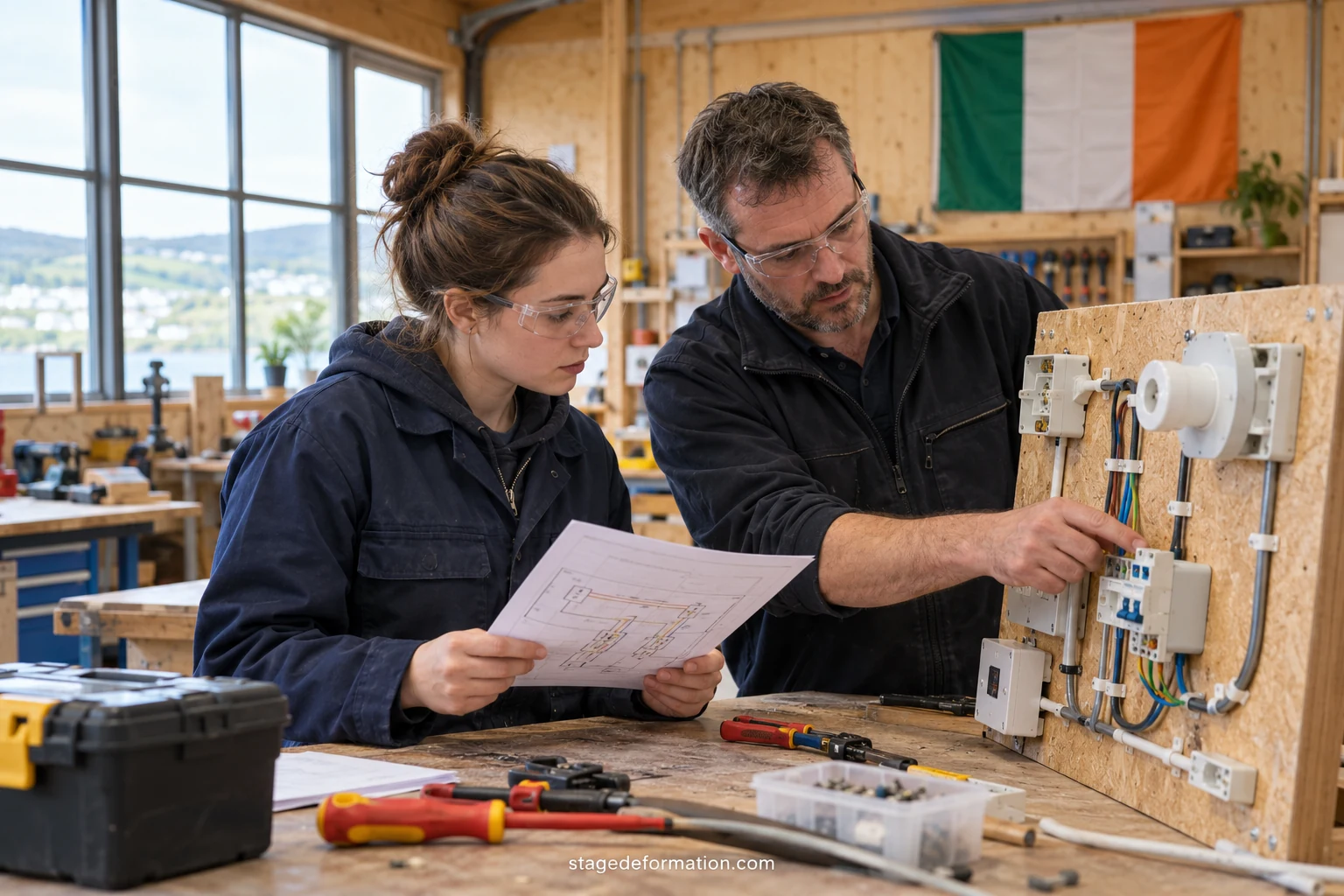
The Irish apprenticeship system is coordinated nationally and promoted under the name Generation Apprenticeship. It includes the traditional craft trades, such as electrical work or carpentry, and newer programmes designed with groups of employers in fields such as finance, information technology, engineering or hospitality.
The principle is alternation between work and study: the apprentice is an employee, learns on the job and attends off-the-job training blocks at an educational institution. The programme generally lasts between two and four years depending on the trade, and leads to a qualification placed on the national framework of qualifications.
One point deserves attention: an apprenticeship normally presupposes an employer. You therefore look first for the company that will hire you, and then register on the programme. Entry conditions, durations and pay levels are set by the rules in force and they change over time, so consult the official portal before taking any step.
University internships and integrated placements
Many Irish bachelor's and master's programmes include a period of work in industry, sometimes lasting several months and sometimes a full semester. Universities and institutes of technology organise these placements through their careers services, which circulate vacancies, advise on applications and work with employers.
For a student coming from France, two situations arise. In the first, they join an exchange and the placement is added to the host programme. In the second, they stay enrolled at home and look for an ordinary internship that their own school will validate. In both cases the approval of the home institution remains essential, because it is the body that decides whether the period counts.
Research centres also welcome students. Tyndall National Institute in Cork, which specialises in microelectronics and photonics technologies, presents on its website an internship programme across its research centres and support functions, with disciplines ranging from physics to computing and marketing.
Legal framework and status: what to check
Ireland has no single definition of an internship comparable to the one that exists in France. A person's position depends on the nature of the activity: if they carry out work for an employer, rules on pay and employee protection may apply. If they are in training supervised by an educational institution, different rules come into play. That boundary matters.
- Always ask for a written document setting out the tasks, the duration, the status and the pay.
- Distinguish a training period validated by your school from ordinary work.
- Find out about insurance and cover in case of an accident, which differ depending on status.
Pay levels, including the national minimum wage, are set by regulation and revised periodically: check with official sources before you sign anything.
Staying and working in Ireland from France
Citizens of the European Union can in principle look for a job or complete a work period in Ireland without a work permit. A tax and social security identification number, known as a PPS number, is generally needed in order to be registered. It is requested from the Irish social welfare services, which can take a few days or weeks, so it is best to plan for it early.
The cost of living, and above all of housing, is high, particularly in Dublin. Start looking for accommodation as soon as the period is confirmed, either through university services when they provide listings or through rental platforms. Be wary of any request for payment before a viewing.
The United Kingdom, including Northern Ireland, has been under a separate regime since Brexit: do not mix up the two countries in your paperwork.
Finding vacancies and targeting the right employers
The careers services of Irish universities publish resources for finding work experience. The one at Trinity College Dublin, for example, offers pages devoted to work and experience opportunities. Even if you are not enrolled at Trinity, this content helps you understand local practice.
General websites for students and recent graduates bring together internship vacancies, graduate programmes and advice on applications. They also let you spot recruitment periods, which often fall several months before a summer internship begins.
The most visible sectors are technology, international finance, pharmaceuticals and life sciences, agri-food, tourism and culture. Target companies whose activities match your studies and read the pages they reserve for students.
Preparing an application the Irish way
The curriculum vitae, usually called a CV, is short and factual, with no photo and no mention of age or family situation. One page is enough for a student, two for a more advanced profile. Achievements are presented through action verbs and concrete results.
The cover letter personalises the application: why this organisation, which experience brings you closer to the role, and what contribution you aim to make. Many Irish employers also use online forms and tests, sometimes followed by a video interview.
The interview is held in English and rewards precise examples: a situation, your action, the result. Prepare two or three stories drawn from university projects, societies or student jobs. Fluent but simple English is better than a sophisticated vocabulary you cannot handle well. Irish accents sometimes come as a surprise, so watch some local content before the interview.
Illustration: an imagined twelve-month journey
Take the hypothetical case of a French student in the second year of a master's degree who wants a five-month internship in Dublin.
- September to November: she reads careers resources, sends around ten targeted applications and prepares for an interview in English.
- December to January: she receives an offer, has the assignment approved by her school and signs the agreement.
- February: she applies for her PPS number, books temporary accommodation and checks her insurance.
- March to July: she completes the internship, keeps a log of tasks and hands in a report to her school.
These dates and durations are fictional. They mainly show that you need to start six to nine months ahead and that approval from your school comes before departure.
Common mistakes
- Confusing an internship with an apprenticeship and sending the wrong application.
- Leaving without an agreement from your home institution.
- Booking accommodation late, when rents are climbing.
- Accepting an unpaid assignment without understanding its status.
- Using a French CV without adapting it: photo, length, wording.
Frequently asked questions
What is the difference between an internship and an apprenticeship in Ireland?
An internship is a temporary experience, often lasting a few weeks to a few months, with no single framework. An apprenticeship is a training pathway in employment, generally two to four years long, leading to a recognised qualification. The apprentice is an employee and alternates between work and off-the-job training.
Does a French citizen need a work permit in Ireland?
EU citizens do not in principle need a permit to work in Ireland, but they must obtain a PPS number in order to be registered. Rules can change and depend on personal circumstances, so check with the Irish authorities or your institution before you leave.
Is an internship in Ireland paid?
It depends on the status. A person working for an employer may be covered by minimum pay rules, whereas a training period validated by a school follows other logic. Ask in writing what the status is and what the amount is, if any, and compare it with the rules that apply.
When should I start looking for an internship in Ireland?
Several months ahead. Large companies and research bodies open applications well before the summer, and integrated placements follow the university calendar. Allow time too for the placement agreement, the PPS number and housing.
What level of English do I need?
A working level sufficient to follow instructions, write emails and take part in meetings. Employers do not always set a precise score, but an interview in English is almost always part of the process. Practise presenting your projects in a simple way, with figures where you can.
How do I find accommodation for the duration of an internship?
Start with the accommodation services of the university or the employer, then move on to rental platforms. In large cities demand is strong and rents are high. Never send money before you have viewed the property or checked the landlord's identity, and arrange a temporary solution for the first few weeks.